

Skip to content

Private university · Selangor, Malaysia

MAHSA University Malaysia: admission from Uzbekistan

Medicine, dentistry, pharmacy, IT, engineering and business taught in English, from a Foundation year to a PhD. On some programmes graduates also receive a degree from a British university. We help you choose a programme, apply and get your student visa.

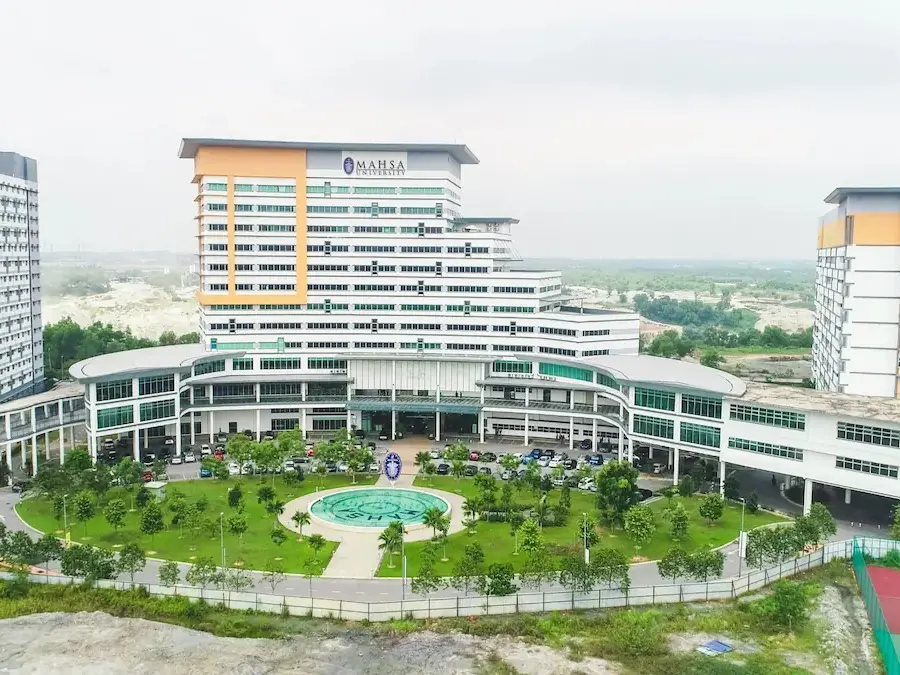
MAHSA University main campus in Bandar Saujana Putra, Malaysia
MAHSA UniversityStudent route

TAS

Tashkent

KUL

Kuala Lumpur

Campus
Bandar Saujana Putra
Taught in
English
Levels
Foundation → PhD
Intakes
several a year

Key facts

MAHSA University in numbers

MAHSA started in 2004 as a health sciences academy — the name stands for Malaysian Allied Health Sciences Academy. Today it is a private university with faculties of medicine and health, engineering, IT and business. The figures below come from MAHSA itself, QS and its UK partner universities.

  • 2004founded

    Founded by Professor Tan Sri Dr Hj. Mohamed Haniffa. The university grew out of a health sciences academy, so medicine, dentistry and pharmacy are its strongest fields.

  • 92programmes

    The number MAHSA gives across Foundation, diploma, bachelor’s, master’s and PhD levels. The catalogue below covers 83 of them with descriptions.

  • 1,150international students

    Out of 5,589 students, according to QS. One in four academic staff is also from abroad.

  • 75countries

    MAHSA has more than 20,000 alumni from 75 countries, according to the university.

  • 48acre campus

    The main campus in Bandar Saujana Putra covers about 20 hectares, with teaching buildings, student housing, a sports centre with a pool and a clinic in one place.

  • 2UK universities

    The University of East London and Anglia Ruskin University award their own degree alongside MAHSA’s on partner programmes.

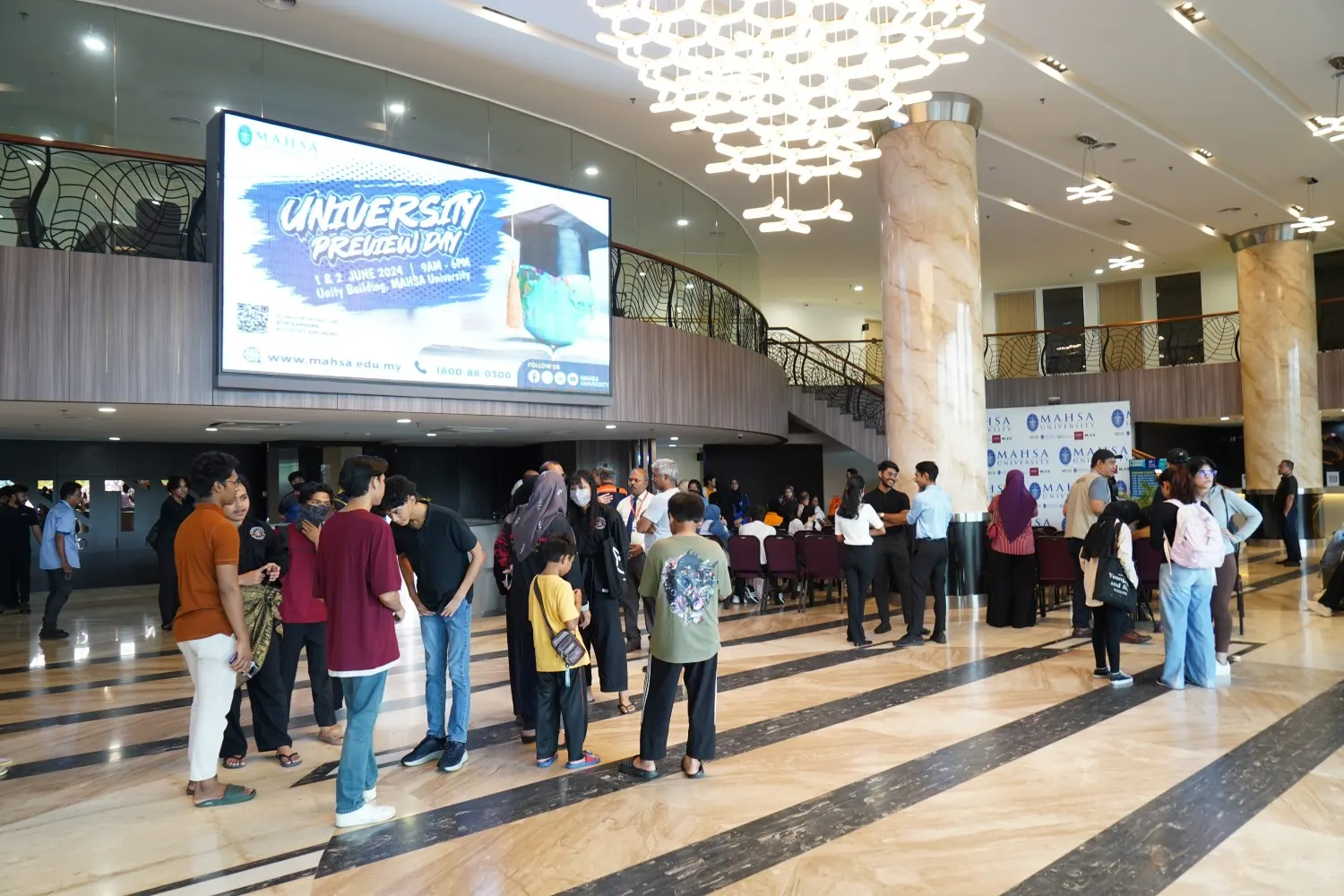
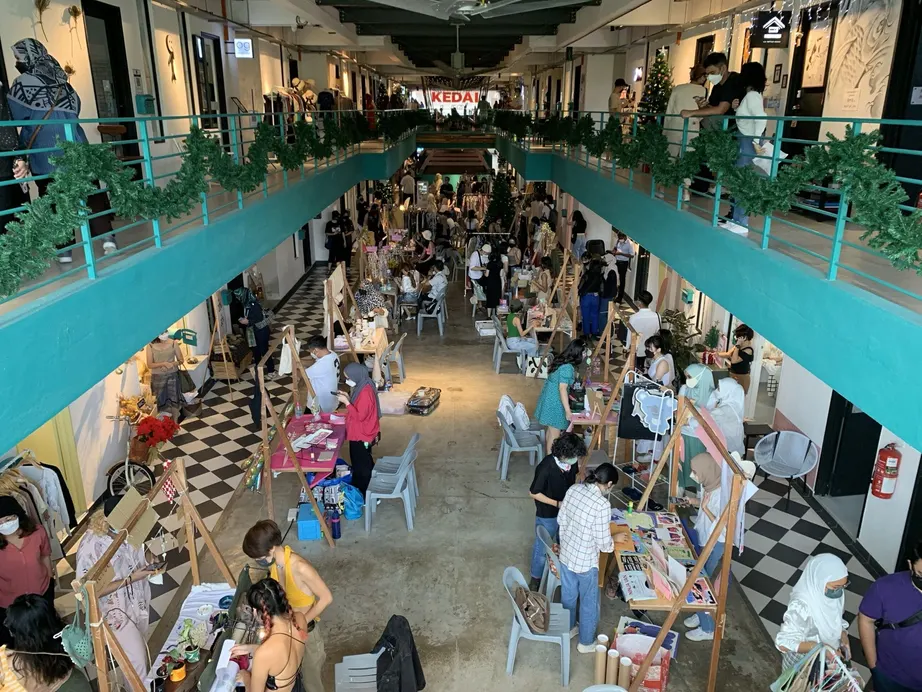
University Preview Day in the MAHSA main building: prospective students with their parentsA student market at MAHSA Avenue

Student life

Student life at MAHSA: comfort and new opportunities

MAHSA is more than a university: it is a campus town where everything is close by — student housing, cafés, a gym, a pool, places to relax and medical care. It is easy to combine study with an active life, from clubs and sport to evenings with friends, and to prepare for exams in a quiet library.

  • Housing on campus

    MAHSA Residence offers furnished single, twin and triple rooms, with or without air conditioning. There is round-the-clock security, CCTV and residence staff who look after students.

  • Sport

    The MARS sports centre has a gym, a pool, a sauna and courts. Membership is free for students living in the residence.

  • Support in the first weeks

    An orientation week, a student buddy who helps you find your feet and a faculty mentor you can go to with any question about your studies.

  • Clubs and certificates

    Clubs, sport and volunteering through Student Central. Through the PRIDE programme students earn certificates from Microsoft, Adobe, Autodesk and other companies alongside their degree.

Rankings and recognition

MAHSA University rankings and achievements

Where MAHSA stands in international rankings and how Malaysia’s Ministry of Higher Education rates it, with the year and the body behind each result.

International rankings

  • QS Asia University Rankings 2026

    =577

    Among universities in Asia; 107th in South-Eastern Asia. Its highest scores are for the share of international students and staff.

  • THE World University Rankings 2027

    801–1000

    The 801–1000 band of the Times Higher Education world ranking.

  • THE Medical and Health 2026

    401–500

    The Times Higher Education subject ranking for medicine and health.

MAHSA University QS Stars “Excellent, 5 Stars” badge listing Teaching, Employability, Academic Development, Online Learning and Inclusiveness

QS Stars: 5 stars

MAHSA reports a QS Stars rating of “Excellent”, with top marks in six categories including teaching and employability. QS Stars is an opt-in audit by QS, not a ranking position; we confirm the year of the rating with the university.

SETARA “Competitive” rating badge of the Malaysian Ministry of Higher Education

SETARA: Competitive

The Malaysian Ministry of Higher Education rating (SETARA 2022) places MAHSA in the “Berdaya Saing” (Competitive) category, the same as Universiti Malaya and Taylor’s University.

Dual degree: MAHSA and a UK university

Students study in Malaysia and graduate with two degrees, one from MAHSA and one from a British university. The course takes as long as the standard programme (except some engineering degrees), but you must meet the entry requirements of both universities.

University of East London

  • BSc (Hons) Accounting & Finance
  • BSc (Hons) Islamic Finance
  • BSc (Hons) Business Management
  • BA (Hons) Hospital Management
  • BSc (Hons) Information Technology
  • MEng Mechanical and Industrial Engineering
  • MEng (Hons) Civil and Construction Engineering

Three more courses — Biomedical Science, Physiotherapy Studies and Nursing Studies — are subject to validation at UEL.

List on the UEL website

Anglia Ruskin University

  • Accounting BSc (Hons)
  • Biomedical Sciences BSc (Hons)
  • Business Administration BA (Hons)
  • Electrical and Electronics Engineering BEng (Hons)
  • Electrical Engineering (Automotive) BEng (Hons)
  • Electronics and Communication Engineering BEng (Hons)
  • Mechatronics Engineering BEng (Hons)
  • Medical Electronics Engineering BEng (Hons)
  • Nursing BSc (Hons)
  • Physiotherapy BSc (Hons)
  • Midwifery DipHE
  • Business Administration MBA
  • Hospital Management MBA
  • Public Health MSc
List on the ARU website

Course lists are taken from the UK universities’ websites. They change, so we check the current list before you apply.

Programme catalogue

MAHSA University programmes

All 83 programmes in our catalogue: choose a level or search by name. Each card shows the length of study, a description, the official MAHSA brochure and a short video about the programme.

Level of study

Foundation 3

A preparatory year after school that leads to a bachelor’s degree.

  • Foundation1 year

    Foundation in Arts

    The programme builds the core academic skills in the humanities that students need to succeed in a bachelor’s degree. Students study critical thinking, written and spoken communication, and the basics of the social sciences and culture. It is a strong start for anyone aiming at a career in journalism, education, international relations or other arts-related fields. The course lasts one year and prepares students for university entry while developing independent study habits and an analytical approach.

  • Foundation1 year

    Foundation in Business

    This programme gives students a solid grounding in business. They study the fundamentals of accounting, marketing, management and economics. It prepares graduates for business-related bachelor’s degrees and helps them develop entrepreneurial thinking, leadership and decision-making skills. The course lasts one year and includes practical classes, group projects and consultations with lecturers. It is a natural route for students who plan a career in business or want to start their own company one day.

  • Foundation1 year

    Foundation in Science

    The programme is designed for students planning a career in science, technology, medicine or engineering. It covers mathematics, biology, chemistry and physics at Foundation level. The course develops analytical and research skills and prepares students for science-based bachelor’s degrees. It lasts one year. Students also learn to work in a laboratory, analyse data and form hypotheses, which gives them a solid base for the rest of their academic path.

Diploma 25

Career-focused study after school, 2–3 years; you can then progress to a bachelor’s degree.

Bachelor’s 24

After a Foundation, A-Levels or a diploma; medicine and dentistry take 5 years.

  • Bachelor’s5 years

    Bachelor of Medicine and Bachelor of Surgery (MBBS)

    A five-year medical degree (Bachelor of Medicine and Bachelor of Surgery). Years 1–2 are the pre-clinical phase on campus: basic medical sciences taught in organ-system blocks, with early clinical exposure. Years 3–5 are clinical training in Malaysian government hospitals and health clinics, including Hospital Sungai Buloh and Hospital Kuala Lumpur. The MAHSA MBBS is on the Malaysian Medical Council’s list of recognised medical qualifications.

  • Bachelor’s5 years

    Doctor of Dental Surgery

    A five-year dental degree (Doctor of Dental Surgery). Students train in simulated dental clinics and fully equipped laboratories, then gain clinical experience in the private and public sectors. The programme is accredited by the Malaysian Qualifications Agency (MQA).

  • Bachelor’s4 years

    Bachelor of Biomedical Sciences (Hons)

    The programme trains students in biomedical research, data analysis and the use of modern laboratory equipment. Students study anatomy, physiology, microbiology and pathology. It leads to work in research centres and medical laboratories, or on to a master’s degree.

  • Bachelor’s3 years

    Bachelor of Accounting (Hons)

    The course gives an in-depth understanding of accounting, financial analysis, taxation and auditing. Students learn international financial reporting standards and develop strategic thinking.

  • Bachelor’s3 years

    Bachelor of Arts (Honours) in Creative Multimedia Design

    The programme combines theory and practice in design, animation, data visualisation and multimedia technology. Students develop creative thinking and design skills.

  • Bachelor’s3 years

    Bachelor of Business Administration

    Students study project management, marketing, finance and strategic planning. The course builds leadership, market analysis and communication skills.

Master’s 16

After a bachelor’s degree: taught and research programmes, 1–2 years.

  • Master’s2 years

    Master in Engineering

    The programme is for engineers who want to deepen their knowledge of design, current technology and research. It develops project management and scientific analysis skills.

  • Master’s2 years

    Master in Information Technology

    The programme covers advanced programming, systems development, cybersecurity and IT project management. It suits those who want to advance their careers in the IT industry.

  • Master’s1 year

    Master of Business Administration

    The programme develops management and leadership skills, strategic planning and market analysis. It is a strong choice for future senior managers.

  • Master’s1 year

    Master of Business Administration (Financial Technology)

    The course combines the study of financial markets and technology. Students explore digital payments, blockchain and financial innovation.

PhD & certificates 15

Doctoral degrees and short postgraduate certificates for nurses, doctors and teachers.

  • PhD & certificates6 months

    Post Basic Certificate in Critical Care Nursing

    The programme teaches the care of critically ill patients, vital-signs monitoring and emergency care. Students learn advanced intensive care techniques. It is designed for qualified nurses with clinical work experience.

  • PhD & certificates6 months

    Post Basic Certificate in Gerontology

    The course focuses on caring for older people, preventing age-related illness and improving patients’ quality of life. It is designed for qualified nurses with clinical work experience.

  • PhD & certificates6 months

    Post Basic Certificate in Perioperative Nursing

    The programme teaches operating theatre practice, preparing patients for surgery and post-operative care. It is designed for qualified nurses with clinical work experience.

  • PhD & certificates6 months

    Post Basic Certificate in Renal Nursing

    The course prepares nurses to care for patients with kidney failure and to carry out dialysis. It is designed for qualified nurses with clinical work experience.

  • PhD & certificates1 year

    Postgraduate Certificate in Aesthetic Medicine

    The programme teaches modern aesthetic medicine techniques, including injectables and device-based procedures. It is designed for medical doctors.

Lengths are for full-time study. Brochures come from the official MAHSA website; videos are YouTube Shorts from the ASIA Academia channel. We check with the university whether a programme has an intake in the month you need.

Planning to become a doctor or a dentist? Entry requirements for the MBBS and Doctor of Dental Surgery and the route from school are on our page about studying medicine in Malaysia.

Fees

How much does MAHSA cost?

Tuition fees depend on the programme and change from one intake to the next. We ask MAHSA for the exact fee per year and for the whole course, in ringgit, for your programme — the same figure appears in your offer letter. The other costs are known in advance.

Request a fee quote Cost of studying in Malaysia: all expenses and a university comparison 
Tuition fees
on request
MAHSA’s official fee for one year and for the whole course, in RM. We send it after a consultation.
On-campus housing
RM 500–1,200 / month
A twin or single room, with or without air conditioning, plus a RM 500 registration fee. MAHSA’s 2023 international rates; we confirm the current ones.
Living in Malaysia
RM 1,200–1,800 / month
Food, transport, phone and small expenses — MAHSA’s estimate, excluding housing and tuition fees.
Visa, medical check and insurance
RM 2,858–3,004
EMGS student visa fees, the medical screening after arrival and compulsory insurance for the first year.

How fees are paid

International students pay MAHSA for the academic year in advance or on a schedule agreed with the finance office; there is also a monthly Flexi Payment Plan. Tuition fees go directly to the university’s account — Malaysian Allied Health Sciences Academy Sdn. Bhd. — against its invoice.

Admission

Entry requirements for students from Uzbekistan

MAHSA admits international students under the rules of each programme. Below are the core requirements from the official programme pages; the admissions office converts an Uzbek school certificate to its Malaysian equivalent and states the result in the offer letter.

Where you can start

  • After grade 11 — Foundation1 year, 3 semesters

    You need a school certificate at SPM / O-Level standard or equivalent: five credits in any subjects for the Foundation in Business or Arts, and five credits including Mathematics and two science subjects for the Foundation in Science. After the Foundation you progress to a MAHSA bachelor’s degree in the same field.

  • Medicine, dentistry, pharmacyvia the Foundation in Science

    The route to the MBBS, Doctor of Dental Surgery and Pharmacy requires at least a B in Biology, Chemistry, Physics and Mathematics plus one other subject. The MBBS and dentistry require IELTS 6.0.

  • Diploma2–3 years

    A certificate equivalent to SPM with three credits including Mathematics, and IELTS 5.0 — as for the Diploma in Information Technology, for example.

  • Bachelor’s degree3–5 years

    Entry is based on a Foundation, A-Levels, STPM or a diploma, so school leavers almost always start with a Foundation. Example — Bachelor of Information Technology: a Foundation with a CGPA of 2.00 or above and IELTS 5.0.

  • Master’s and PhD1–3 years

    You need a bachelor’s degree (a master’s for a PhD). The minimum grade and English level depend on the programme — we check them against your degree.

English language

Teaching is in English. MAHSA accepts IELTS, TOEFL, MUET, Cambridge English and PTE Academic; the minimum score is listed for each programme. If you have no certificate or your score is too low, the university runs a free English Diagnostic Test and places you on its Intensive English Programme. EMGS also asks for a certificate during the visa process — without one, processing may be delayed.

Intakes

  • January
  • March
  • April
  • May
  • August
  • September
  • October

MAHSA takes in new students several times a year. The application form on MAHSA’s portal offers these months for 2027, and the Foundation takes students at the start of every semester. We check which months are open for your programme in advance.

Documents for the application

  • Passport scan
  • School certificate with grades (and a diploma, if you have one)
  • Passport-size photo
  • IELTS or another English certificate, if you already have one

For the student visa your passport must be valid for at least 18 months. We prepare translations and certified copies together with you.

Step by step: how to apply to a university in Malaysia 

Campus

Where is MAHSA University?

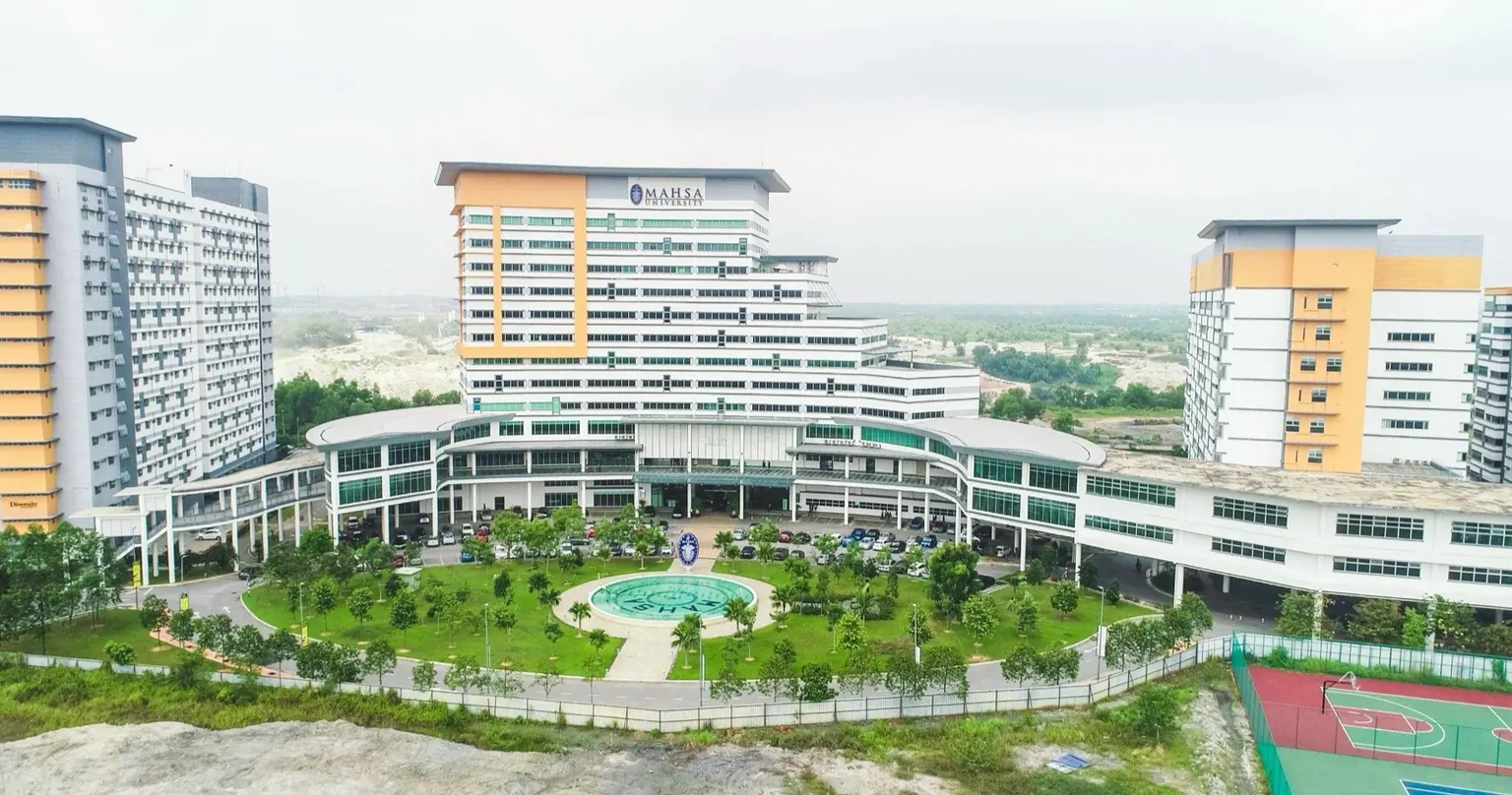
The main campus is in Bandar Saujana Putra, Selangor, about 30 minutes by car from Kuala Lumpur International Airport (KLIA). It is not in central Kuala Lumpur: it is a self-contained campus town.

Aerial view of the MAHSA University main building in Bandar Saujana Putra
  • Main campus

    Bandar Saujana Putra

    Teaching buildings and laboratories, the university dental clinic, MAHSA Specialist Hospital, student housing and a sports centre.

    Jalan SP 2, Bandar Saujana Putra, 42610 Jenjarom, Selangor

    Open in Maps
  • Kuala Lumpur

    KL Campus

    In Kuala Lumpur the MAHSA group is based on Jalan Ilmu, home to MAHSA Prima International College. Your offer letter states where your programme is taught.

    Jalan Ilmu, off Jalan Universiti, 59100 Kuala Lumpur

    Open in Maps

MAHSA Residence

Student housing right on campus: two blocks, furnished rooms and security around the clock. Under MAHSA’s rules, students under 21 must live in the on-campus residence, which many parents find reassuring.

  • Registration fee RM 500, non-refundable.
  • International students pay a year in advance.
  • Only air-conditioned rooms have a water heater.
  • Prices are from MAHSA’s 2023 international rates; we confirm them for your intake.
RoomRM per month
Twin
500
Twin, air-conditioned
700
Single
1,000
Single, air-conditioned
1,200
Executive (premium single)
2,000–2,500

Scholarships

MAHSA scholarships and discounts

MAHSA says a scholarship can cover up to 100% of tuition fees. A university committee decides, and the terms are updated for each intake — below are the rules from the official website.

Foundation · bachelor’s · master’s · PhD

MAHSA Blue Ribbon Scholarship

Up to 100% of tuition fees for the current level and priority for on-campus housing. Thresholds: five As at SPM / IGCSE for the Foundation, a CGPA of 3.5 or above in a Foundation, A-Levels or a diploma for a bachelor’s, and 3.5 or above at the previous level for a master’s or PhD. To keep it you need a CGPA of 3.0, 80% attendance and up to 120 hours of volunteering.

Master’s · PhD

Graduate Excellence Initiative (GREI)

A 30% tuition discount in return for a work placement in MAHSA’s research centres or with partners, at least 10 hours a week. A taught master’s requires a bachelor’s CGPA of 3.5 or above.

Instalments

Flexi Payment Plan

Not a discount but a payment plan: tuition fees can be split into monthly instalments.

OPAL offer

A scholarship for the Foundation year

We help students win a Foundation scholarship: the first year of study is free and you only pay for document processing. Places are limited and terms depend on the intake and programme — we check whether you qualify during a consultation.

Check your chances 

How we help

Applying to MAHSA with OPAL Education

We guide the student from choosing a programme to the first day on campus. Tuition fees are paid directly to the university, and at every step you know what has been done and what comes next.

  1. 01

    Consultation and choice

    We review your grades, English level and budget, choose a programme and intake, and ask MAHSA for the fees.

  2. 02

    Application to MAHSA

    We prepare documents and translations, apply on the university portal and help with scholarships.

  3. 03

    Offer letter and payment

    We go through the offer terms with you. Payment goes straight to MAHSA against the university’s invoice.

  4. 04

    Student visa

    MAHSA applies to EMGS; we gather the documents, track the eVAL and help with the entry visa.

  5. 05

    Flight and move-in

    Your flight details go to MAHSA 7 days ahead, and a university representative meets you at the airport. We help with housing and the medical check.

What are MAHSA University fees for international students?
Fees depend on the programme and change with each intake, so we ask MAHSA for the official fee per year and for the whole course, in ringgit, for your programme. The rest is known in advance: on-campus housing costs RM 500–1,200 a month (2023 rates), living costs RM 1,200–1,800 a month by MAHSA’s estimate, and EMGS visa fees with insurance in the first year RM 2,858–3,004. See our guide to the cost of studying in Malaysia.
Do I need IELTS to study at MAHSA?
For most programmes, yes: the minimum is listed for each programme, for example IELTS 5.0 for the IT diploma and bachelor’s and 6.0 for the MBBS and dentistry. TOEFL, MUET, PTE Academic and Cambridge English are accepted too. If you do not have a certificate yet, MAHSA runs a free diagnostic test and offers an Intensive English Programme. Keep in mind that the student visa also requires an English certificate.
Can I go to MAHSA straight after school?
Yes, through the Foundation — a three-semester preparatory year taught in English. You need a certificate equivalent to SPM / O-Level with five credits; the medical route needs at least a B in Biology, Chemistry, Physics and Mathematics. After the Foundation you progress to a MAHSA bachelor’s degree in the same field. More in our guide to studying abroad after school.
Where is MAHSA University located?
The main campus is at Jalan SP 2, Bandar Saujana Putra, 42610 Jenjarom, Selangor, about 30 minutes from KLIA airport. It is not in central Kuala Lumpur: the campus is a self-contained town with student housing, a sports centre, a clinic and the MAHSA hospital.
Does MAHSA have student housing and how much does it cost?
Yes, MAHSA Residence is on campus. Under MAHSA’s 2023 international rates a twin room costs RM 500–700 a month and a single RM 1,000–1,200 (air-conditioned rooms cost more), plus a RM 500 registration fee. Under MAHSA’s rules students under 21 live in the on-campus residence.
Is a MAHSA degree recognised?
MAHSA programmes are accredited by the Malaysian Qualifications Agency (MQA), and its MBBS is recognised by the Malaysian Medical Council. On dual degree programmes graduates also receive a British degree from UEL or ARU. In Uzbekistan a foreign degree is recognised by the Agency for Assessment of Knowledge and Qualifications via my.gov.uz; graduates of universities on the annually approved list of the world top 1,000 follow a simpler procedure — we check whether MAHSA is on the current list when you apply.
Does MAHSA offer scholarships for international students?
Yes. The main one is the Blue Ribbon Scholarship for high achievers, covering up to the full tuition fees for the current level. For master’s and PhD students there is GREI, a 30% discount combined with work at the university. Terms are updated for each intake, so we check what you can apply for. Other options are in our guide to scholarships to study abroad.
When are the MAHSA intakes?
There are several intakes a year. MAHSA’s 2027 application form offers January, March, April, May, August, September and October; the exact months depend on the programme. Apply a few months ahead: after the offer letter you still need a student visa through EMGS.
Does MAHSA teach medicine and dentistry?
Yes: the MBBS and the Doctor of Dental Surgery (5 years each), plus pharmacy, nursing, physiotherapy, medical imaging and biomedical sciences. School leavers start with the Foundation in Science. More on our page about studying medicine in Malaysia.

TAS KUL

Find out the fees and your scholarship chances at MAHSA

Leave your number: a consultant will review your grades and English, choose a programme and intake, and ask MAHSA for a fee quote for your programme.

We reply within one working day. Your number is used only to discuss your admission. By sending the form you agree to the privacy policy.