
- Without IELTS
- English
- Malaysia
- Admissions
Study abroad without IELTS: real options in Malaysia for students from Uzbekistan
Can you study in Malaysia without IELTS? An honest guide for families in Uzbekistan: other accepted tests, university English programmes and Foundation.
- Published
- Reading time
- 8 min
In short
- An IELTS certificate is optional; English is not. Lectures, textbooks and exams will all be in English.
- For a Malaysian student visa, IELTS is only one of several accepted tests: MUET, TOEFL iBT, PTE Academic, Cambridge English and others also count.
- If your English is not strong enough yet, you can start with the university's own English programme and then move on to Foundation or a bachelor's degree.
- Medicine, pharmacy and the state El-Yurt Umidi scholarship all require proof of English, so "without IELTS" rarely works there.
Families usually search for "study abroad without IELTS" for one of two reasons. Either the exam looks expensive and difficult, or the student is just finishing school and their English is still at a basic level.
Below we go through what you can realistically do in each case. Our examples come from Malaysia, which is where we most often help school leavers from Uzbekistan apply.
What "without IELTS" really means
The phrase covers three different situations, and each one has a different answer.
- Good English, no certificate. The easiest case: take another recognised test or the university's own placement test.
- Some English, but not enough. You need an English course first and the main programme after it.
- Almost no English. This is what people mean by "study abroad without knowing the language". The honest answer: admission starts with learning English, and that takes months, not weeks.
No programme teaches in English to someone who does not speak English at all. Anyone who promises otherwise is simply pushing the problem into the first semester.
Why Malaysia works for this
English is the main language of higher education in Malaysia. According to Education Malaysia Global Services (EMGS), the government agency that processes student visas, most courses in the country are taught in English, and more than 160 higher education institutions teach in English.
For a student whose English is not yet strong, this has two advantages:
- you can improve your English where you will later study, because universities run their own English programmes;
- after grade 11 you need a preparatory year anyway. International students need at least 12 years of education to enter a diploma or degree, while school in Uzbekistan lasts 11 years. That is why school leavers usually start with Foundation, and that year also builds their English.
For an overview of the country, universities and how studies are organised, see our guide to studying in Malaysia.
Option 1. Take a different test instead of IELTS
IELTS is the best-known exam, but not the only one. When you apply for a student visa, EMGS accepts these certificates:
| Test | What to know |
|---|---|
| MUET | Malaysian exam; City University's language centre is a test venue |
| IELTS, IELTS Online | the best-known format |
| TOEFL iBT, TOEFL Essentials | Essentials is taken online |
| PTE Academic | also available online |
| Cambridge English | B1 Preliminary, B2 First, C1 Advanced, C2 Proficiency, Linguaskill |
| OET | test for healthcare professions |
| ELS CIEP | a level completed on the ELS intensive programme |
Two details people often miss:
- The Duolingo English Test is not on this list (checked in October 2026). Even if a university accepts it for admission, it is safer to have one of the tests above for the visa.
- The EMGS rules set no minimum score. The university sets it, and it differs from programme to programme.
Why the certificate matters: EMGS warns that without an English certificate your visa application may be delayed, and you will not be eligible for a Student Pass covering the full length of your course.
Option 2. An English programme at the university
If it is too early to sit an exam, the route looks like this: an English course in Malaysia, then Foundation or a bachelor's degree at the same university. Here is how it works at the two universities where we most often help students apply.
MAHSA University
MAHSA states that English is its medium of instruction. International students without the required score take a free English Diagnostic Test and, depending on the result, are placed on the Intensive English Programme. For faculties and programmes, see our page on MAHSA University.
City University Malaysia
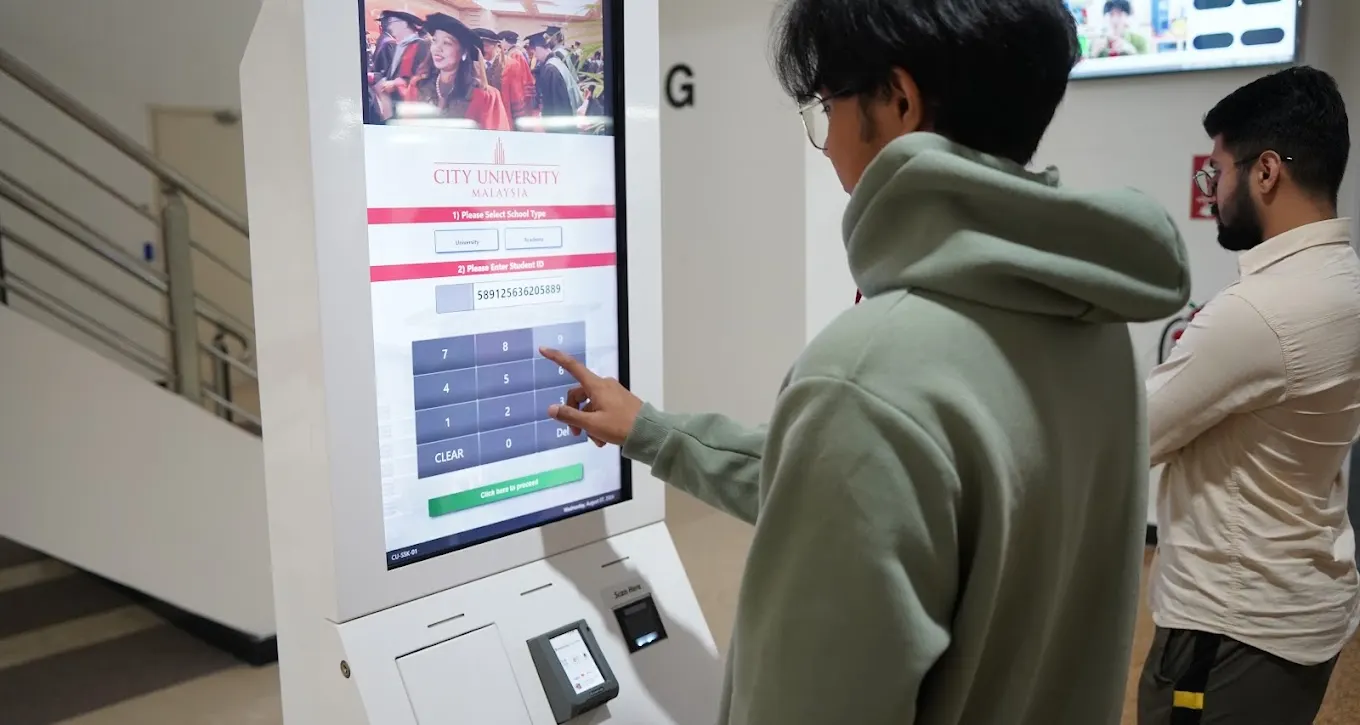
City University's language centre runs a General-Intensive English Programme: levels from Elementary to Advanced with IELTS preparation, three months per level, with intakes in January, April, July and October. It also offers one-month IELTS and MUET preparation courses.
As a guide to entry levels: for the Bachelor of Business Administration (BBA), international applicants need MUET Band 3, CEFR Low B2 or an equivalent. More on our page about City University Malaysia.
How many levels you need depends on where you start, so the length of the course can only be estimated after a placement test. We also check with the university how the Student Pass is arranged for the English programme.
Option 3. Foundation, with lower English requirements
Foundation is a preparatory year before a bachelor's degree. At City University every Foundation programme lasts 12 months, after which students move into the first year of a degree. The whole route takes about four years: one year of Foundation and three years of a bachelor's.
English requirements for Foundation are usually lower than for a degree. As a reference point, the official table of Multimedia University, a private Malaysian university, lists IELTS 4.0 for all Foundation programmes and 5.0 to 6.0 for bachelor's degrees, depending on the programme. MAHSA and City University set their own levels, and we check them for each programme.
English keeps improving during Foundation too. MAHSA's Foundation in Science, for example, includes Communicative English in its curriculum.
For a detailed look at the routes open to school leavers, read our guide to studying abroad after school.
Which route fits you
| Your situation | Realistic route | What to keep in mind |
|---|---|---|
| IELTS, TOEFL or PTE at the required score | Straight to Foundation or a degree | Each programme has its own minimum |
| Decent English, no certificate | A test from the EMGS list or the university's placement test | Without a certificate the visa may be delayed |
| Weak English | University English programme, then Foundation | The course adds months and costs |
| Almost no English | Start learning English in Tashkent while you choose a university | Only a test gives an honest timeline |
| Aiming for medicine | Foundation in Science, then IELTS 6.0 or TOEFL 550 for the degree | No MBBS place without a certificate |
Where "without IELTS" does not work
- Medicine and dentistry. At MAHSA, international applicants to the MBBS and DDS need IELTS 6.0 or TOEFL 550; pharmacy needs IELTS 6.0 with at least 5.5 in each band. More in our guide to studying medicine in Malaysia.
- Nursing. MAHSA's BSc Nursing requires IELTS 5.5 and the ability to converse in Malay.
- The El-Yurt Umidi scholarship. Bachelor's applicants need IELTS Academic 6.0 or an equivalent. The requirement is waived for candidates who already hold an unconditional offer from a university. Other funding options are on our page about scholarships to study abroad.
How to prepare while you are still in Tashkent
- Check your level. A practice test on the CEFR scale (A1 to C2) shows whether exam preparation is enough or an English course is needed.
- Pick an exam from the EMGS list. If the university accepts several tests, choose the format that suits the student best.
- Start early. The higher the level before departure, the shorter the English course in Malaysia and the lower the extra costs.
- Get your documents ready. The school certificate and any other documents not in English need a notarised English translation. Your passport must be valid for at least 18 months to enter Malaysia.
- Plan the budget. The English course, accommodation and visa for that period come on top of the tuition fees for the main programme.
Frequently asked questions
Can I study in Malaysia without IELTS?
Yes, if you prove your English another way: with a test from the EMGS list (MUET, TOEFL iBT, PTE Academic, Cambridge English and others), or with the university's placement test followed by its English course. The final admission decision is the university's.
Can I study abroad without knowing the language?
You cannot follow an English-taught programme without English. You can, however, get in with a lower level and start with the university's English programme. Russian-taught degrees exist in other countries and at other universities; in Malaysia, higher education is mostly in English.
Does Malaysia accept the Duolingo English Test?
It is not on the EMGS list of tests for the student visa (checked in October 2026). Admission is up to the university, but for the visa it is safer to have one of the listed tests.
Do I need IELTS for Foundation?
Foundation requirements are usually lower than for a degree, and weak English can be improved on the university's English course. The exact minimum depends on the university and programme.
How long does an English course take?
At City University, one level of the General-Intensive English Programme takes three months. The placement test shows how many levels you need.
Do I need IELTS to study medicine in Malaysia?
Yes. At MAHSA, international applicants to the MBBS and DDS need IELTS 6.0 or TOEFL 550.
Let's look at your case
At a consultation we look at the student's grades, English level and the family budget, and suggest two or three suitable routes: with a test, with an English course first, or straight into Foundation. Book one through our contact page, at our office in Tashkent or online.
OPAL blog
Read next

Documents to Study in Malaysia: A Checklist
Documents required to study in Malaysia from Uzbekistan: passport, school certificate, translations, English test and EMGS student visa. Checklist and fees.
Read article →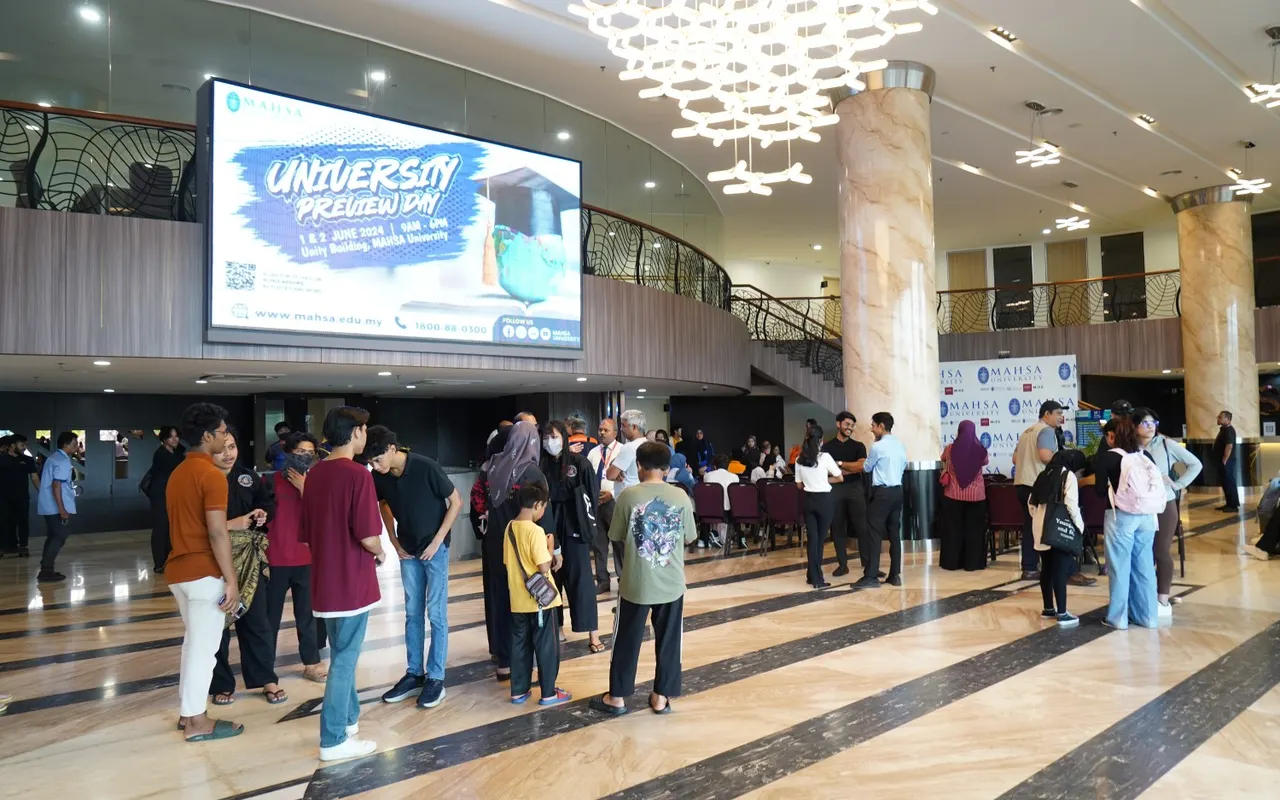
Malaysia University Intakes: When Classes Start
When does university start in Malaysia? Intakes at MAHSA and City University Malaysia, application windows, EMGS visa timing and a month-by-month plan.
Read article →
Is Studying in Malaysia Worth It? Pros and Cons
Is studying in Malaysia worth it? An honest look at fees, English, Foundation after school in Uzbekistan, climate, part-time work and degree recognition.
Read article →TAS KUL
Let’s talk about your application
Tell us about yourself and we will shortlist universities and programmes, work out a budget and explain the next steps.